
What is daily life actually like in the Amazon jungle? Not the idea of it, but the real experience of waking up, moving through the day, and living in a place where nature is not something you visit, but something you live inside.
At first, the difference is subtle, but much of that subtlety comes from the way nature affects the nervous system.Nothing dramatic is happening. There is no rush, no urgency, no pressure to perform. But over time, that subtle shift becomes everything. The day starts to feel different, and eventually, you start to feel different.
Morning: waking with the environment
The day usually begins without force. There is no abrupt transition, no alarm pulling you out of sleep. Instead, there is light, temperature, and sound, birds, distant movement, the quiet presence of the environment coming alive.
You wake gradually. Not because you have to, but because your body is ready.
This alone is a change for many people. Instead of being pushed into the day, you enter it. There is space between sleep and activity. Space to notice how you feel, how you breathe, how your body is.
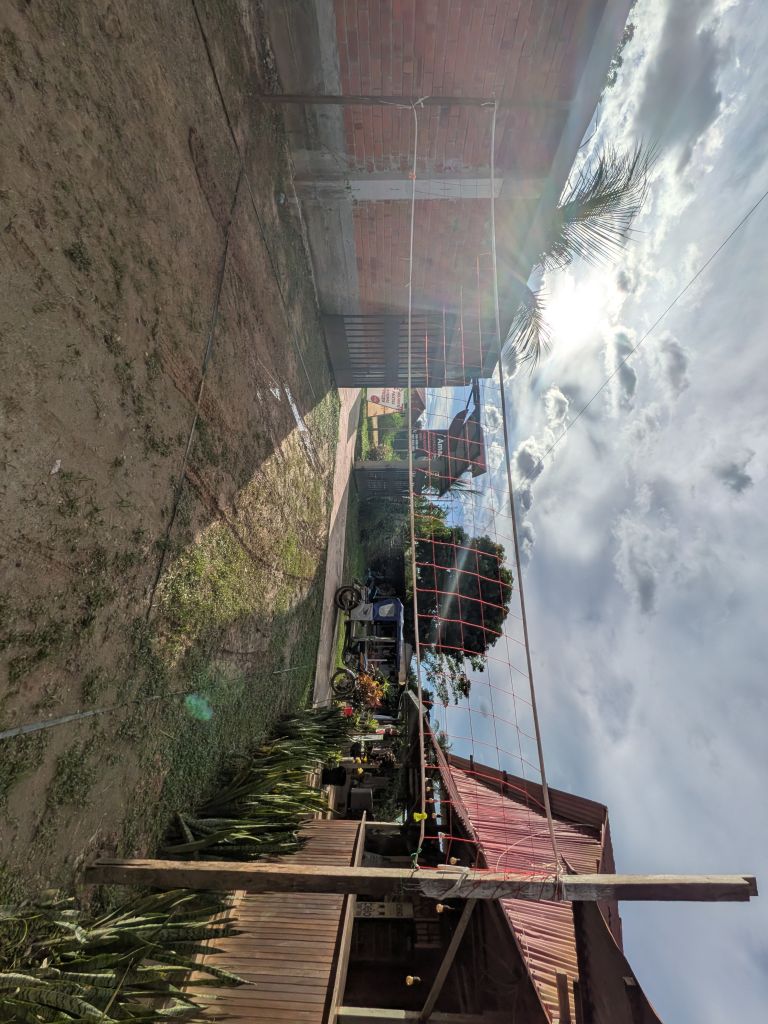
Breakfast is simple. Often light, easy to digest, and aligned with the climate. Tea, fruit, something warm. Nothing heavy, nothing rushed. The body begins the day without strain.
Midday: work, movement, and quiet focus
As the day unfolds, people move into their own rhythm. Some work remotely. Some write. Some read. Some move their body. Some simply sit and observe.
There is no imposed structure, but there is still a natural order to things. Work happens, but it feels different. Without constant interruption, attention becomes more stable. Tasks that would normally feel fragmented begin to feel continuous.
It is not about doing less. It is about doing without unnecessary friction.
Instead of being pulled in multiple directions, you begin to notice how you actually function when your environment is not constantly competing for your attention.
Afternoon: slowing without resistance
By the afternoon, the energy naturally shifts. The heat rises, the pace softens, and the day begins to open up.
This is often when people rest, reflect, or move more slowly. A walk, a conversation, time in a hammock, or simply doing nothing in particular.
In many places, people fight this part of the day. Here, you follow it.
Instead of pushing through fatigue, you allow the body to reset. And because of that, energy later in the day feels more stable, not forced.
“When you stop forcing the day, the day begins to support you.”
Evening: connection and grounded rhythm
As the sun lowers, the atmosphere shifts again. The temperature softens, the light changes, and people naturally begin to come together.
Meals are simple but grounding. Conversations are slower, more present. There is less performance, less need to fill space with noise.
Sometimes there is silence. Sometimes there is laughter. But it rarely feels chaotic.
The day begins to close in a way that feels complete, not abrupt.
Night: deeper rest
Night in the Amazon is alive, but not overwhelming. There is sound, but it is coherent, not chaotic. The body responds differently to it.
Many people notice that sleep becomes deeper. The mind quiets more easily. Dreams may become more vivid, but also more connected.
There is less resistance to rest. The body is ready for it.
What changes over time
One day like this feels interesting. A few days feel refreshing. But after a week or two, something deeper begins to shift.
After a month, it is no longer just the environment that feels different, it is you. That is the deeper reason long-term stay changes so much.
People often notice a slower internal pace, clearer thinking, less anxiety, and a different relationship to time. Not because they are trying to change, but because the conditions around them no longer reinforce constant pressure.
What returns is something simple: the ability to live a day without feeling pushed through it.
Final thoughts
A day in the Amazon jungle is not defined by intensity. It is defined by alignment.
When the environment is right, daily life begins to organize itself in a way that feels natural. You are not constantly reacting. You are simply living, and that begins to feel like enough.
For the right person, that shift is not small. It is foundational.
This rhythm also tends to support people who are going through integration after ayahuasca or any season of life that requires more quiet and clarity.
Long-Term Stay in Peru
Want to experience this daily rhythm?
You can apply for a long-term stay at Florido Amazon and experience what life feels like when it is no longer rushed.
Apply for Your Stay