
Many people prepare intensely for an ayahuasca ceremony, but give far less attention to what happens afterward. Yet integration after ayahuasca is often the most important part of the entire process. A ceremony can open, reveal, cleanse, confront, soften, or reorganize something deep inside you. But what you do next determines whether that movement stabilizes or fades.
What ayahuasca integration really means
Ayahuasca integration is the process of allowing what you experienced in ceremony to be understood, absorbed, and expressed in your actual life. It is not only about “making sense” of visions. It is also about how your body, emotions, habits, and relationships begin to shift afterward.
In some cases, people come out of ceremony feeling clear and open. In other cases, they feel raw, emotional, tired, sensitive, disoriented, or unexpectedly quiet. All of that can be part of the process. Integration is what gives the experience a container.
Without integration, a powerful ceremony can remain fragmented. With integration, even subtle experiences can become life-changing.
For many people, the integration process does not end a few days after ceremony. The environment a person enters afterward can strongly influence emotional stability, nervous system recovery, and the ability to process what was experienced. This is one reason why some people seek a more supportive ayahuasca integration retreat in Peru before immediately returning to ordinary life.
What to do in the first 24 hours after ayahuasca
The period immediately after ceremony matters. This is when the nervous system is often more open, more impressionable, and more sensitive to environment. What helps most is usually not stimulation, analysis, or performance. It is simplicity.
In the first 24 hours after ayahuasca, the most supportive things are often:
- resting deeply
- drinking water and rehydrating gently
- eating simple, nourishing food
- limiting phone, internet, and social noise
- avoiding heavy decision-making too quickly
- staying in a calm environment
Many people underestimate how much the body is still processing after ceremony. Even when the mind wants to “figure it out,” the body often needs quiet first.
Why the environment after ceremony matters
One of the biggest differences between difficult integration and healthy integration is the environment a person returns to. If someone leaves a ceremony and immediately re-enters noise, conflict, overstimulation, rushed travel, or emotional chaos, the process can become much harder.
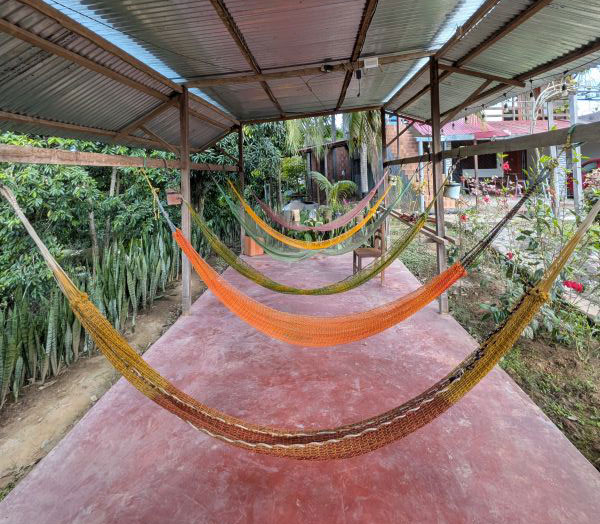
A supportive integration environment does not need to be luxurious. In many cases, it looks more like a simple, grounded daily rhythm than anything dramatic. It needs to be steady. Peaceful surroundings, simple daily structure, access to food and rest, and contact with nature can make a major difference.
“The ceremony may open the door. Integration is what allows you to walk through it.”
Common mistakes after an ayahuasca ceremony
One of the most common mistakes people make after ayahuasca is trying to force meaning too quickly. Not everything needs to be decoded immediately. Some things need to be lived before they can be understood.
Other common mistakes include:
- returning to overstimulation too fast
- talking too much before feeling what actually changed
- seeking another ceremony before integrating the last one
- treating the experience like content instead of transformation
- ignoring the body while focusing only on symbolic meaning
Integration is not meant to be dramatic. It is meant to be honest and real.
The body and nervous system after ayahuasca
After a ceremony, people often focus on the psychological and spiritual layers. But the physical layer is equally important. The nervous system may still be highly open. Digestion may be sensitive. Sleep may deepen or become vivid. Emotions may move more easily than usual.
This is one reason why grounded routines matter so much. Breath, sleep, walking, light food, hydration, and a more peaceful environment often support the process more than constant discussion does.
The body needs time to catch up with what the psyche experienced.
How to integrate ayahuasca into daily life
Real integration happens when insight starts entering ordinary life. That may mean:
- changing a habit you know is no longer aligned
- making space for more silence and less noise
- eating more simply
- setting clearer boundaries
- journaling what feels true now
- giving yourself time before major decisions
Sometimes the biggest integration is not a dramatic external change. It is a more subtle shift in how you live the same life. Your pacing changes. Your attention changes. Your honesty changes. Your tolerance for what is false changes.
What kind of support helps after ayahuasca
People often ask whether they need a therapist, coach, guide, friend, or community after ceremony. The answer depends on the person and the experience. But what helps most is usually not just advice, it is the right kind of environment and contact.
Helpful support may include:
- a quiet place to rest
- people who are calm and grounded
- space for reflection without pressure
- simple daily rhythm
- access to nature and nervous system regulation
- time before re-entering heavy social demands
In that sense, ayahuasca integration is not only a psychological process. It is also logistical. Where you stay, what you eat, who you are around, and how you move through the days afterward all shape the outcome.
Why a longer stay can help integration
For some people, a short return to ordinary life is enough. For others, integration benefits deeply from a longer, steadier environment. This is especially true when the ceremony touched something major, grief, direction, identity, nervous system overwhelm, or a deeper life transition.
A longer stay in a peaceful place can give the experience time to settle naturally. Instead of forcing conclusions, the person begins to live into the change. This is where deeper integration often becomes possible.
Final thoughts on ayahuasca integration
If you are wondering what to do after an ayahuasca ceremony, the answer is often simpler than people expect. Slow down. Rest. Eat simply. Reduce noise. Stay close to what feels real. Let the body settle. Let meaning emerge in time.
Ayahuasca integration is not about holding onto an experience. It is about allowing the experience to reshape your life in a grounded and honest way.
For many people, integration becomes much easier when the environment itself supports calm, simplicity, and space. That is also why living in the Amazon feels so different from simply passing through it.
Long-Term Stay in Pucallpa, Peru
Need a peaceful place to integrate?
Florido Amazon offers a calm long-term living environment for people seeking simplicity, nature, rest, and grounded daily life in Peru.
Apply for Your Stay