
Most people underestimate how much their environment is shaping their nervous system on a daily basis. Not through dramatic events, but through constant, low-level signals, sound, movement, pressure, light, pace, and expectation. These signals accumulate and quietly define what “normal” feels like in the body.
The state most people live in without realizing it
In modern environments, the nervous system is rarely at rest. Even when nothing is happening, there is still noise, still movement, still anticipation. Traffic, screens, conversations, notifications, responsibilities, all of it creates a background layer of stimulation that never fully turns off.
Over time, the body adapts to this. It learns to function with a slightly elevated level of activation. Breathing becomes more shallow. Attention becomes more fragmented. Rest feels incomplete, even after sleep. The mind keeps moving, even when there is no reason for it to.
Because this state is continuous, it becomes invisible. It does not feel like stress. It simply feels like life.
What changes when you step into a natural environment
Nature affects the nervous system more deeply than many people realize. For individuals recovering from chronic stress, emotional exhaustion, or intense inner work, a quieter environment can help the body gradually regulate itself again. This is one reason some people choose an ayahuasca integration environment in Peru instead of rushing immediately back into overstimulating city life.
When you move into a natural environment, the inputs your nervous system receives begin to shift. There is less abrupt noise, less artificial light, less constant interruption. In their place, there is something more coherent, patterns of sound, movement, and rhythm that are not random or demanding.
Wind moves through trees. Light changes gradually. Sounds rise and fall without urgency. Nothing is trying to pull your attention in ten directions at once. Instead, the environment holds a kind of continuity that the body recognizes, even if the mind does not immediately understand it.
This is not something you need to analyze. The nervous system responds automatically. It begins to adjust. This is also why living in the Amazon feels so different from simply visiting it for a short period of time.
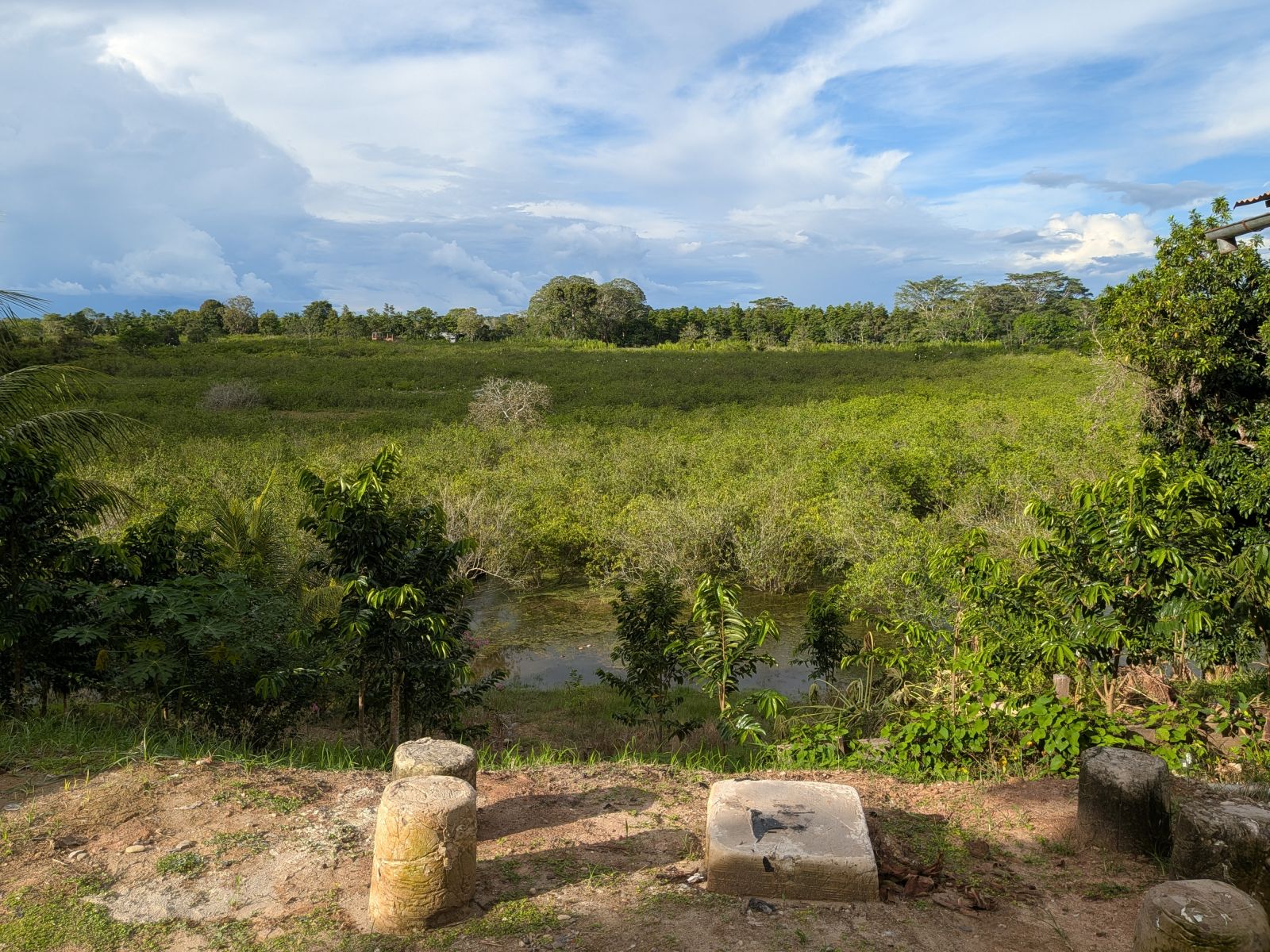
The nervous system begins to regulate without effort
At first, the shift often feels like simple relief. There is more space in the body. Less internal pressure. A sense that things are not pushing you from the outside anymore. But if you stay long enough, that initial relief deepens into something more stable.
Breathing slows down without needing to control it. Sleep becomes deeper, not because you are more tired, but because the system is less activated. Attention becomes easier to sustain. Thoughts feel less scattered, less urgent, less repetitive.
What changes is not only how you feel in moments of rest, but what your baseline becomes throughout the day.
This is the part that many people do not expect. The environment is not just helping you relax. It is slowly redefining what “normal” feels like in your system, something that becomes especially noticeable during a longer stay.
Why time is what makes the difference
These changes do not happen instantly. A few days in nature can feel refreshing, but they rarely change the underlying pattern. The nervous system responds to repetition, not novelty.
Waking up in the same environment. Eating without pressure. Moving without urgency. Sitting without needing to fill the space. These repeated conditions begin to signal to the body that it no longer needs to remain in a heightened state.
Over time, the system reorganizes. Not through effort, but through consistency. What once felt like “relaxing” becomes simply how you are.
Attention begins to stabilize
One of the most noticeable changes is in attention. In high-stimulation environments, attention is constantly being pulled outward. Even when you try to focus, something interrupts, externally or internally.
In a more natural environment, that pulling decreases. There is less competing for your attention, and as a result, your mind does not need to constantly reorient itself. Focus becomes less effortful. Presence becomes more available.
You are able to stay with a thought, a task, or a moment without being pulled away from it. This alone changes how work, conversation, and daily life feel, something you can observe more directly in a typical day at Florido Amazon.
“When the environment becomes coherent, the mind no longer needs to defend itself against fragmentation.”
Emotional patterns begin to shift
As the nervous system becomes less activated, emotional responses begin to change as well. This does not mean emotions disappear. It means they move differently.
Reactions become less immediate. There is more space between what happens and how you respond. Emotions are less likely to accumulate into pressure and then release all at once. Instead, they move in a more continuous way.
This creates a different relationship to experience. Instead of reacting, you begin to notice. Instead of suppressing, you allow. The system is no longer trying to keep up with constant input, so it has space to process what is actually happening, especially in an environment where people are living with more awareness.
Why the Amazon environment is especially powerful
The Amazon is not quiet in the way people often imagine. It is active, alive, and constantly moving. But that activity is not chaotic. It is patterned, layered, and continuous.
This creates a unique effect on the nervous system. You are surrounded by life, but not overwhelmed by it. The environment is rich, but not demanding. It invites attention without forcing it.
For many people, this leads to a stronger sense of grounding and connection. Not as an idea, but as a direct experience. You feel more stable, not because you are trying to be, but because the environment supports that state.
Final thoughts
Living in nature does not add something new to your system. It removes what has been interfering with it.
When constant stimulation, pressure, and fragmentation fall away, the nervous system begins to return to its natural rhythm. Breathing changes. Attention changes. The way you experience time changes.
For many people, this is not only calming. It is clarifying. It allows them to feel what has been hidden underneath the noise of their previous environment, something that becomes especially important during integration after deeper experiences.
Long-Term Stay in Pucallpa, Peru
Want to experience this shift in your own system?
Florido Amazon offers a natural environment where your nervous system can gradually settle into a more stable and grounded state.
Apply for Your Stay